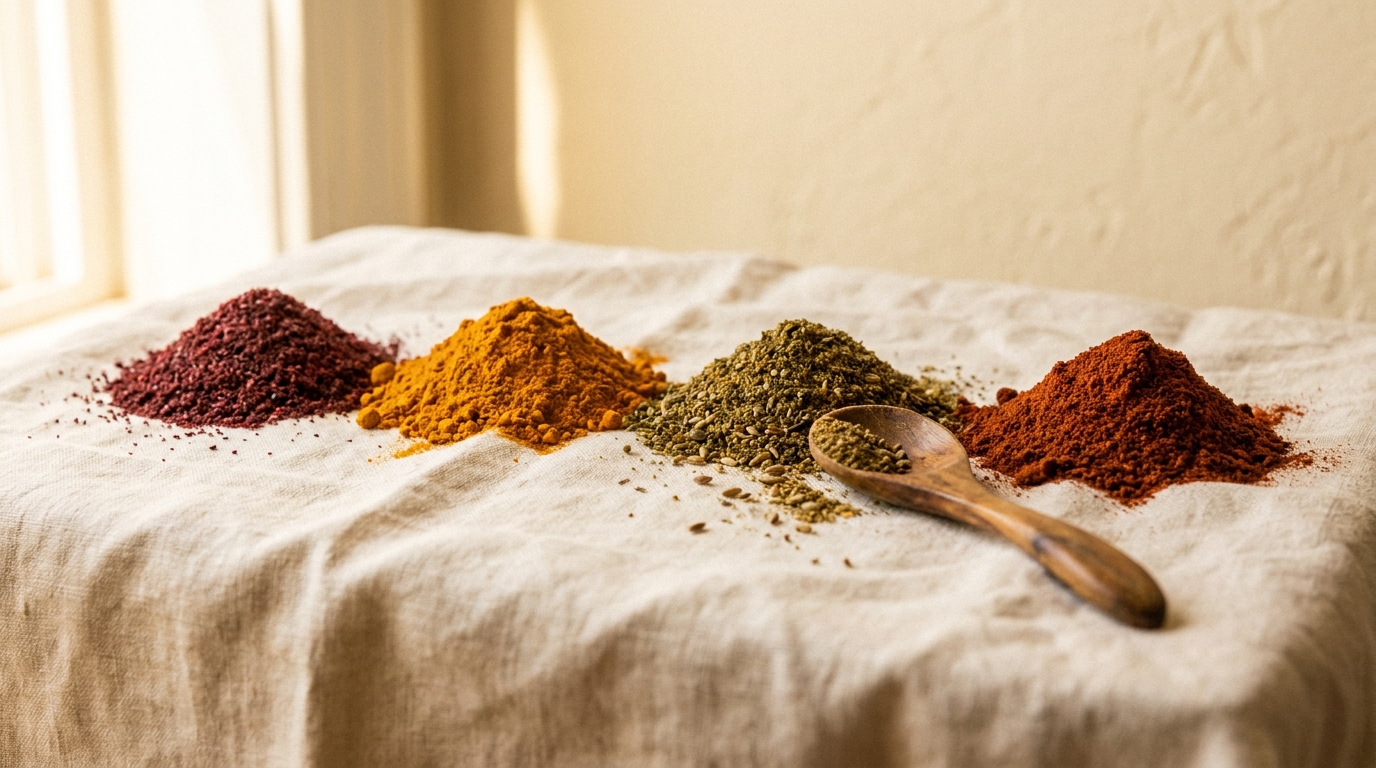
Tahini is a paste made from ground sesame seeds. On a good jar that is the whole ingredient list. It pours like a loose nut butter, tastes nutty with a slightly bitter finish, and it is the ingredient that makes hummus taste like hummus. The name comes from the Arabic tahana, "to grind or crush," according to the Online Etymology Dictionary. You will also see it sold as tahina, and as tahin in Turkish shops.
On its own it is rarely the point. Tahini is a base: thinned with lemon and water it becomes a pourable sauce, and stirred into yoghurt it becomes a cooling one. Both show up on this site, in three recipes that use it three different ways.
What tahini tastes like, and what it isn't
Straight from the jar, tahini is rich and a little dry on the tongue, with a bitter edge that sharpens the darker the seeds were roasted. It is not sweet. Whisked with lemon, it turns pale and tastes brighter and far less heavy, which is how most recipes use it.
Two things get confused with it. Toasted sesame oil is the oil pressed from sesame, with none of the body, and a few drops of it taste stronger than a spoonful of tahini. The dark sesame paste sold for Chinese cooking is made from well-toasted seeds and tastes much deeper. Neither is a like-for-like swap.
Hulled or unhulled, roasted or raw
Every jar is some combination of two choices, and the label usually tells you both.
Hulled tahini is made from sesame with the outer seed coat removed. It is paler, smoother and milder, and it is the most common kind. Unhulled tahini grinds the whole seed, coat included. It comes out darker, thicker and more bitter, with a slightly gritty feel.
The coat is also where most of the calcium is. The USDA's FoodData Central lists whole dried sesame seeds at 975 mg of calcium per 100 g, and hulled (decorticated) sesame kernels at 60 mg. That is a real difference on paper. In a sauce you eat a few spoonfuls of, flavour is the better reason to choose.
Most tahini is made from roasted seeds. The same USDA database lists tahini "from roasted and toasted kernels" as the "most common type." Roasting gives the deeper, nuttier taste people expect. Raw tahini, from unroasted seeds, is lighter in colour and milder.
For the sauces below, buy a smooth, hulled, roasted tahini that pours when you stir it. The pantry staples guide gives the same advice.
Why the oil sits on top
Open a jar that has been on the shelf a while and there will be a layer of oil over a stiff paste at the bottom. That is normal. The sesame oil separates out the same way it does in natural peanut butter. Soom Foods, a US tahini maker, says to give the jar a good stir or shake so the oil works back in, and suggests storing the jar upside down to cut down on separation.
Stir it back in rather than pouring the oil off. Without it the paste at the bottom is hard work to loosen, and the sauces come out claggy.
How tahini is used in kebab rolls, kafta tacos and fattet musakhan
These three recipes all lean on tahini, and each one gives it a different job.
In kebab rolls, tahini goes into a yoghurt tahini sauce: 1 cup of yoghurt, half a cup of tahini paste, the juice of a lemon, half a tablespoon of salt and a tablespoon of minced garlic, mixed until smooth. The sauce goes down on the plate first and the baked kebab rolls sit on top of it. At one part tahini to two parts yoghurt, it is thick, tangy and clearly nutty.
In kafta tacos there is no yoghurt at all. The dressing is 1 cup of tahini, three quarters of a cup of ice-cold water and the juice of 2 to 3 lemons, whisked until smooth and creamy. It goes over the cooked pita along with a chopped salad of onion, tomato and parsley. This is tahini sauce in its plainest form, and the recipe says to adjust the lemon or water until it is the consistency you want.
In fattet musakhan, tahini is the quiet part of the sauce. Four tablespoons go into 2 cups of plain yoghurt with four crushed garlic cloves, the juice of a lemon and salt. That is one part tahini to eight parts yoghurt, so the sauce reads as garlicky yoghurt with a nutty background. It is spooned over crispy pita, then the chicken and caramelised sumac onions go on top.
The ingredient is the same in all three and only the ratio changes, so if you have made one of these sauces you can make the other two.
How to make tahini sauce
The basic sauce is tahini, lemon juice and cold water. Salt and garlic are optional.
- Put the tahini in a bowl. Stir the jar first so you get the oil as well as the paste.
- Add the lemon juice and stir. The tahini will tighten and look thick and grainy, even split. This is expected, so keep going.
- Add ice-cold water a tablespoon or two at a time, whisking between each addition. After a few additions it loosens, turns smooth and goes noticeably paler.
- Stop when it is the thickness you want. Thicker for spreading under meat, thinner for drizzling. Taste, then add salt, more lemon, or a little grated garlic.
As a starting point, the kafta tacos dressing halves neatly: half a cup of tahini, 6 tablespoons of ice-cold water and the juice of one to one and a half lemons. For a yoghurt version, use the kebab rolls ratio of one part tahini to two parts yoghurt, with lemon, garlic and salt.
Tahini sauce thickens as it sits in the fridge. Loosen it with a splash of water and stir before serving. It is also one of the sauces in what to serve with kebabs, next to garlic yoghurt and toum.
Tahini substitutes
What works depends on why you need one.
You ran out. Another smooth, unsweetened seed or nut butter, thinned with lemon and water exactly like tahini, is the closest match in texture. Sunflower seed butter is the nearest in character because it is also a seed paste. Cashew butter is milder and creamier. Peanut butter works but tastes clearly of peanut, so taste as you go. Avoid anything sweetened, since sugar shows up fast in a savoury sauce.
The sauce is mostly yoghurt anyway. In the fattet musakhan sauce, there is one part tahini to eight of yoghurt. Leaving it out and making a plain garlic, lemon and yoghurt sauce loses the nutty note and keeps the dish working. The kebab rolls sauce misses it more, because the ratio there is one part tahini to two of yoghurt.
Someone at the table has a sesame allergy. Swap the whole sauce rather than the tahini. Peanuts and tree nuts are separate major allergens in their own right, so a nut butter only helps if those are known to be safe for that person. A garlic yoghurt sauce, or toum, which is garlic, oil, lemon and salt with no sesame in it, does the same job next to grilled meat.
Not sesame oil. It carries the flavour of sesame with none of the body, and it overwhelms a sauce in a few drops.
Sesame is a priority allergen
Tahini is sesame in concentrated form, and sesame is a regulated allergen in both Canada and the United States.
Health Canada lists sesame as a priority food allergen and names "Tahini (sesame paste)" among the other names it appears under. It lists hummus, dressings, marinades and sauces among foods that may contain sesame, and advises people with the allergy to avoid products whose label says "may contain" sesame or similar wording.
In the US, the FASTER Act made sesame the ninth major food allergen. According to the FDA, sesame must be labelled as an allergen on packaged foods and dietary supplements as of January 1, 2023. The same page notes that some manufacturers changed their recipes after the law took effect, so there are now products with small amounts of sesame that did not have it before. A product you have bought for years is worth a fresh look at the label.
If you are cooking for a group, say which dishes contain tahini. On a mezze platter it can be in the hummus, the dips and the dressings all at once.
How long tahini keeps, and how to store it
Soom Foods gives its own tahini a shelf life of two years or more unopened, in the pantry or the fridge, and says an opened jar can last up to a year. Other brands date their jars differently, so the date on your jar is the one to follow.
Where you keep it changes the texture more than the life of it. In the pantry it stays thinner and easier to stir and drizzle. In the fridge it thickens, which is useful for spreading and a nuisance for sauce. Either way, Soom says to keep it somewhere cool and dry, away from heat and direct sunlight, because moisture and heat are what break it down. Use a clean, dry spoon.
To loosen cold tahini, spoon what you need into a bowl and stir in a little warm water there. Soom's advice is to do it in the bowl, not in the jar.
Soom describes tahini that has gone off as having a sharp, sour smell. Fresh tahini smells of toasted sesame and nothing else.
More of the dishes tahini belongs in are in the Middle Eastern recipes hub.