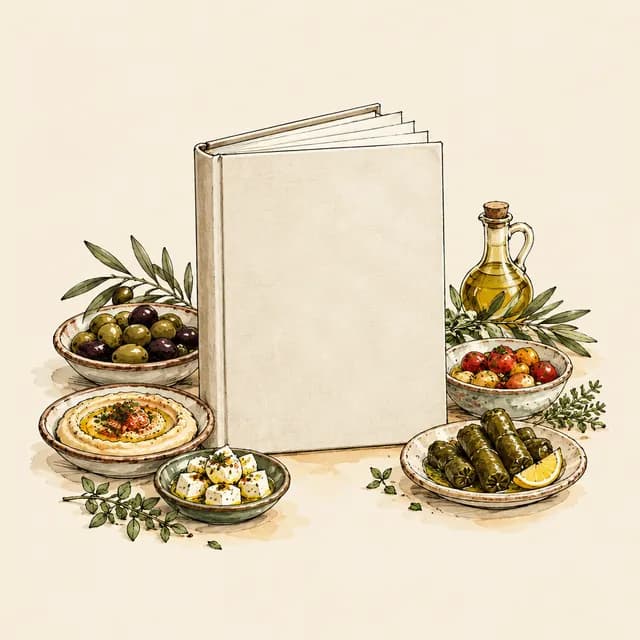
A mezze platter is a spread of small Middle Eastern dishes eaten together, at once, in the middle of the table. Not courses. Not a starter before the real food.
In most Levantine homes the mezze is the meal, and it lands as one wave: two or three dips, something pickled, something warm off the grill, a sharp salad, and enough bread to move all of it.
If you want the short version: build it from four groups, not from a list. One creamy dip, one sharp thing, one warm thing, one crunchy thing. Everything after that is decoration.
The four groups
Most mezze guides hand you a shopping list of fifteen items. That is why people end up with a board of beige dips and nothing to cut through them. Groups work better because they force contrast.
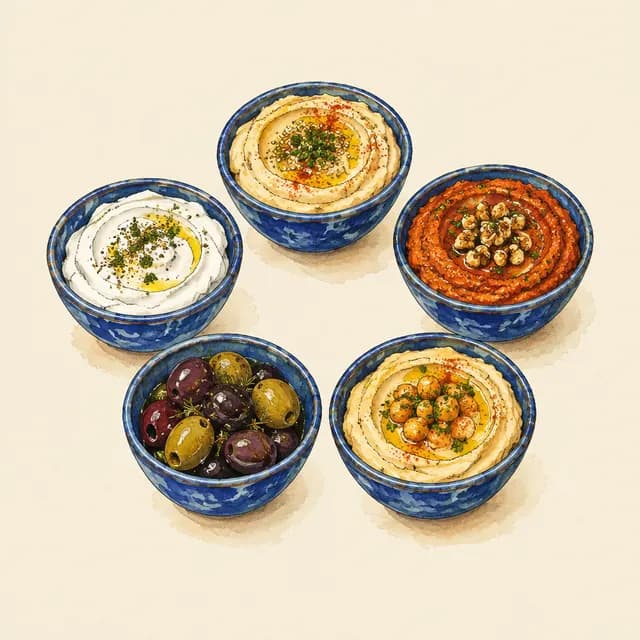
Creamy. Hummus, baba ganoush, labneh, muhammara. This is the base everyone reaches for first and the reason you need the other three groups.
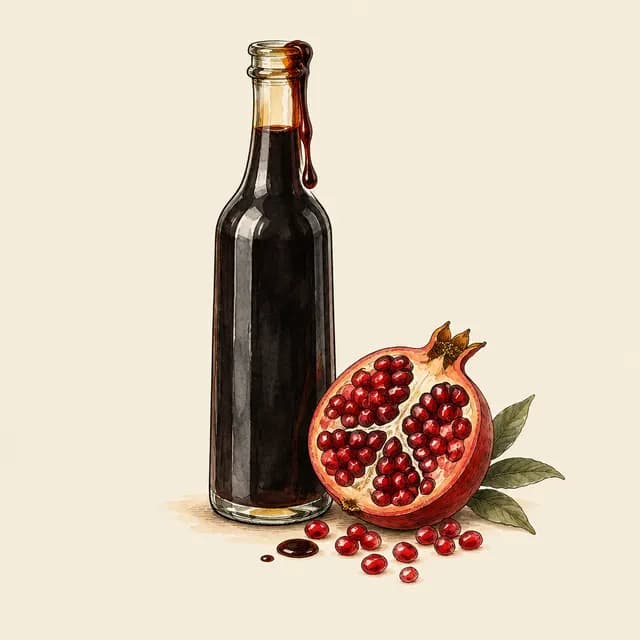
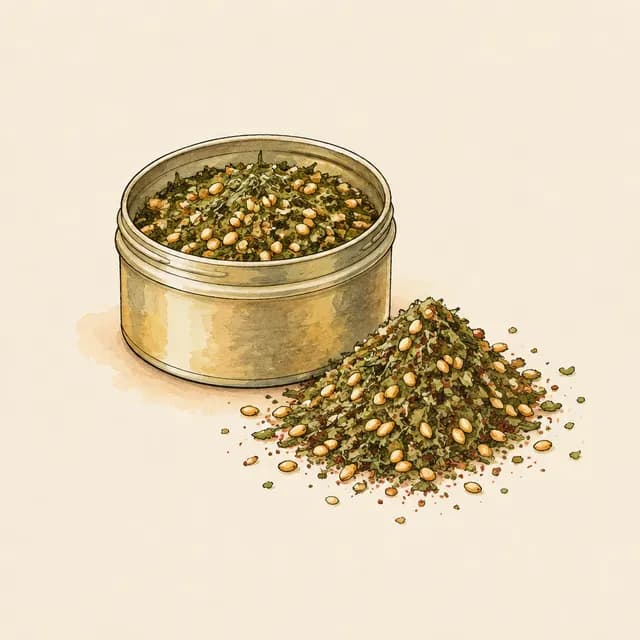
Sharp. Pickled turnips, olives, pickled cucumbers, a lemony salad. Anything acidic. My fattoush does this job better than a bowl of olives because the sumac and the pomegranate molasses hit the same note the pickles do, and the fried pita doubles as the crunch.
Warm. One hot thing changes the whole table. It does not need to be complicated. Kafta off the pan, Adana kebab, or kebab rolls cut into short lengths so people can pick them up. For a breakfast spread, shakshuka in its pan is the warm thing.
Crunchy. Warm bread, toasted pita, radishes, cucumber batons, raw pepper strips. Bread is the utensil, so there is never enough of it. Same-day focaccia is not traditional here and it works anyway, because what the table needs is something that tears.
Hit all four and a platter of six things reads as generous. Miss one and twelve things read as flat.
Mezze platter or charcuterie board?
They look similar in a photo and they are built on opposite logic.
A charcuterie board is dry and grazing: cured meat, hard cheese, crackers, something sweet. You pick at it standing up, and nothing on it needs a spoon.
Mezze is wet and communal: dips, oil, herbs, warm bread, things that need scooping. You sit down to it. The bread is doing the work a cracker cannot, and half the plate is designed to be dragged through the other half.
The practical difference is that mezze does not survive being made three hours early and left out. Dips crust, bread goes hard, herbs wilt. Charcuterie is fine sitting there. Mezze wants to land close to when people eat.
What actually goes on it
Working versions, by group, for six people:
- Creamy: hummus, baba ganoush, labneh with olive oil, muhammara
- Sharp: fattoush, pickled turnips, olives, tabbouleh
- Warm: kafta, Adana kebab, kebab rolls, halloumi straight off the pan
- Crunchy: warm pita, focaccia, cucumber, radish, raw pepper
- Extras: stuffed vine leaves, feta, nuts, figs or grapes
Two things worth adding if you are feeding people properly rather than grazing: fattet musakhan, which turns bread, chicken and sumac into something substantial, and a bowl of toum. Toum divides tables. Make it anyway.
The part that goes wrong
Everything is the same texture. Four dips is not a spread, it is four dips. Contrast is the entire point.
Not enough bread. Every dip needs a vehicle. Budget more than feels sensible, and warm it. Cold pita out of a bag is the fastest way to make good food feel cheap.
One giant board. A single board means the people at the far end reach past three others or give up. Two or three smaller plates, spread down the table, is how it is actually eaten at home. It also means you can bring the warm thing out when it is warm instead of assembling everything at once.
Dips served straight from the fridge. Cold hummus is stiff and tastes of nothing. Take it out twenty minutes ahead, then pool olive oil on top before it goes down.
No salt on the raw vegetables. Cucumber and radish sitting naked next to a heavily seasoned dip taste like filler. Salt them.
Building it the day of
Mezze rewards doing almost nothing at the last minute, which is the opposite of how most people run it.
The night before, make the dips. They are better after a night in the fridge, and it is the only part that genuinely improves with time. Pickles and olives need nothing.
The morning of, chop the raw vegetables and keep them covered. Mix the fattoush dressing but keep it away from the leaves and the pita, or you will serve soup.
In the last twenty minutes, take the dips out to lose their chill, warm the bread, and cook the one hot thing. Dress the salad last. Then everything reaches the table inside a few minutes of each other, which is the whole trick.
How much food
For six people sharing mezze as the meal, not as a starter: three dips, two salads or pickled things, one warm dish, and roughly one and a half flatbreads per person. That sounds like a lot of bread. It is not.
If mezze is a starter and something substantial follows, halve the warm dish and keep everything else.
Where mezze comes from
Mezze runs across the Levant, Turkey, Greece and Iran, and the word is shared even where the food is not. What sits on the table shifts with the country: more olive oil and lemon in Lebanon, more yoghurt and grilled meat in Turkey, more herbs in Iran.
The habit underneath is the same everywhere, and it is the reason mezze feels different from a starter course. Nobody gets their own plate. You eat from the middle, slowly, for a long time, and the food is arranged to make that comfortable rather than to be photographed.
More of this style of cooking is in the Middle Eastern recipes hub, and the lighter, lemon-and-olive-oil end of it sits under Mediterranean. If you are building a pantry to cook from, start with the staples guide.
New here? Read Why I Started Simply by Maha.