Parsley bought on Saturday should still be good the following Saturday. Most of it is slime by Tuesday, and the reason is almost always the same: it went into the fridge wet, in the bag it came in.
The method that works takes two minutes. Wash the herbs, dry them properly, wrap them in a dry cloth or paper towel, and put them in a container or a loosely closed bag in the fridge. Dry is the whole thing. Water on the leaves is what rots them, not the fridge and not time.
Why supermarket herbs die so fast
The bag is the problem. It traps the moisture the herbs give off, that water sits on the leaves, and the leaves start breaking down where it touches. A bunch can go from fine to slimy in a day once that starts, and it spreads from one bad leaf to the rest.
Bruising accelerates it. Every crushed leaf is a broken cell wall leaking water onto its neighbours, which is why the middle of a tightly packed bunch always goes first.
The method, for parsley, coriander, mint and dill
These four are soft-stemmed herbs and they all want the same treatment.
- Wash the whole bunch in a bowl of cold water, swirling so grit falls to the bottom. Lift the herbs out rather than pouring, or you tip the grit back over them.
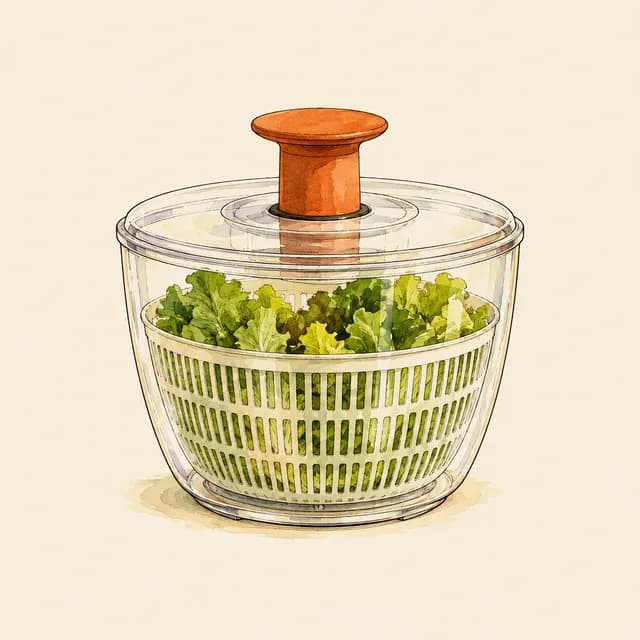
- Dry them properly. A salad spinner is the fastest way. Without one, lay them on a clean tea towel, roll it up loosely and pat. They need to be dry to the touch, not damp.
- Wrap them loosely in a dry tea towel or a couple of sheets of paper towel. Loose matters. Packed tight bruises them.
- Into a container or a bag left slightly open, in the fridge door or the least cold part of the fridge.
Parsley done this way keeps for a good week and often closer to two. Coriander is more fragile and gives you about a week. Mint is somewhere in between.
Change the cloth if it feels damp. That is the only maintenance, and it is what takes a week to two weeks.
The jar method, and when it is actually better
Standing herbs in a jar of water like flowers is the method everyone has seen. It works, with conditions.
Trim the stem ends, stand them in an inch of water, and cover the leaves loosely with a bag. Change the water when it clouds.
It is genuinely better than the towel method for coriander and mint, which drink and perk back up. It is worse for parsley, which does fine either way and takes up far less room wrapped. And it is wrong for basil, which should never go in the fridge at all; it goes black. Basil stands in water on the counter.
Hard herbs are a different problem
Thyme, rosemary, oregano and bay have woody stems and much less water in the leaf, so they do not rot the same way. They dry out instead.
Wrap them in a slightly damp cloth in a container in the fridge and they keep for two to three weeks. If they dry out anyway, that is not a failure. Dried thyme and oregano are useful, and a bunch left to dry hanging up is how most of the world has always done it.
Freezing, and what it is good for
Freezing does not preserve texture. Ice crystals break the cell walls, so a thawed herb is limp and dark. That rules out anything where the herb is raw and visible, like fattoush or tabbouleh, where the parsley is most of the dish.
It works fine where the herb is going to be cooked. Chop the herbs, pack them into an ice cube tray with a little olive oil or water, freeze, then bag the cubes. One cube goes straight into a pan.
Which herb goes where
Parsley is the workhorse of Levantine cooking and it is worth buying properly. It is the bulk of tabbouleh, it is most of the green in fattoush, and it finishes kafta and kebab. Flat-leaf, not curly. Curly parsley is tougher and its flavour is thinner. Half a bunch goes into the chimichurri for steak chimichurri salad, and a whole bunch into Greek pasta salad.
Mint goes with yoghurt, with lamb, and into salads alongside the parsley rather than instead of it.
Coriander is the one people are split on, and the split is genetic rather than a matter of taste. Leave it out if you are cooking for someone who tastes soap. It is the herb in daqoos, the fresh tomato sauce served with chicken kabsa.
Buy them in bunches, not in plastic clamshells. Bunches are cheaper, fresher, and they have the stems, which have more flavour than the leaves and belong in stock.
More of the cooking these herbs are for is in the Middle Eastern recipes hub, and the pantry staples guide covers the dry side of the same kitchen.
New here? Read Why I Started Simply by Maha.